Friday, 26 July 2013

Bike test

Today I went for a small bike ride. 45 mile loop. In readiness for France. And with that I test the new blog app, so I can blog in France :-)

Tuesday, 16 July 2013

Narrowing the Gap

For the #MFLTwitterati requesting Narrowing the Gap feedback, please find my handout below. I shall endeavour to let you have the ideas from other departments by email, as you request!

 
Having read through the Narrowing the Gap document, we have recognised 5 areas that we will implement in our Schemes of Work, our policies and our ethos from September 2013 to enhance learning and secure progress for all students. This has come as a result of feedback from students, learning walks, observations and book trawls throughout the year.

·         Reflection and redrafting post-marking

·         Consistency within in the department (specifically with a non-UK teacher starting in September)

·         Use of data and accountability, with a focus on progress

·         A further understanding and collating of data regarding Student Progress v KS2 data

·         Development of Homework Tasks 


What have we done this half term?

·         All students in KS3 were given preparation time for their answers on the writing and speaking papers. This is rather than expecting spontaneous responses, as the students still do not have the confidence to succeed in this. The huge majority did this well and took the opportunity.

(My concern is that our student cohort does not know how to learn off-by-heart or really know how to revise, but that has to be a whole-school approach and initiative – and early!)

·         All students have completed an end-of-year questionnaire, and the results are being compared to last summer’s, to see how the changes have worked. Feedback will also be used to inform planning for September 2013.

·         The structure of the last 4 weeks following exam week have been changed completely, and as we are not constrained by monitoring levels, the entire focus is on engagement, enrichment and enjoyment. Most French groups are being taught a start course of German, which has been incredibly well received, and the attitudes of the students have been very positive, on the whole.  Year 9s (ELA and LJM) are working on a Grease project, to overlap with their work in Dance. This has been incredibly well received, which is brilliant
A specific group was targeted this half term, based on concerns at the start of the year regarding baselines.

8U3 began Year 8 on a wide range of levels: Level 1 (9%), Level 2 (27%), Level 3 (50%) and Level 4 (14%). I would expect students to end Year 7 on level 3 or 4. In the group, there are 3 FSM, 2EAL and 13 SEN students. The concern with the group was behaviour and engagement, as well as a number of students already below target. The group was also a split group, shared between LJM and LCA. The SoW had to be adapted to the needs of the group, and to support LCA, as a non-specialist. This half term we have supported the group with revision and preparation for the exams. It was also essential that the majority of students made as much progress as possible to ready them for Year 9. The results are clear to see: Level 2 (4%), Level 3 (42%), Level 4 (54%). On average, the students made 3 sub-levels of progress this year. Only one student did not make progress, that is due to an absolute lack of engagement and behaviour concerns.
 

What are we doing in readiness for next year?

·         Reflection and redrafting post-marking

The MFL Marking Policy (attached) has been written for September, with improvement and reflection as a main focus, for all members of the department to follow.

·         Consistency within in the department

Luke and I have worked hard this year to make sure that the non-specialists delivering MFL are completely supported regarding levels, progression, challenge, resources, reporting and delivery. New policies will be written in time for September, so that Geraldine has a ‘bible’ of expectations and understanding.

·         Use of data and accountability, with a focus on progress

KS3 Students will continue to monitor their levels on a half-termly basis by using the Level Tracker Graphs in the front of their books, which they use to good effect.

·         A further understanding and collating of data regarding Student Progress v KS2 data
  •     Development of Homework Tasks  


Thursday, 11 July 2013

What is Language?


So we crash into the time of year when we are entertaining students who are ready for the summer holiday meltdown, and I am trying to save my energy and time by manipulating resources that already exist.

As I was teaching a French group the German alphabet (end of term treat!), an old friend (a resource...!) came into my mind, and I thought it would be the perfect time to resurrect it. It is and has been on the TES for a while, but I whipped it down to size for the sake of what I wanted it for. 

The starter task was the hieroglyphics slide, with questions on it for them to consider. The second think bubble is the next step, once you have gone through the answers and discussed their ideas about language. In the feedback from the starter, I would expect students to use words like communication, symbols, story, and we then talk about languages across the world, different types of language and how human beings communicate.

They then write a definition of "Language", which they then feedback on. We then look at the dictionary definition of "Language", and discuss any thoughts that are raised.

After that, we discussed what languages have in common (also a slide for this) and then we set about the fun part of the lesson.

  • Students were asked to write down the alphabet, one letter per line, and then they were asked to create their own alphabet using symbols and shapes.
  • Once they had done that, they had to create a sound for the letter and write it down, a bit like they did when learning the German or French alphabet pronunciations, e.g. A = (ah).
  • They then wrote their name using their new symbols, wrote out the pronunciation and practised saying it.
  • They also used their new alphabet to write secret messages to each other.
  • We also offered them the lyrics to a song for them to write bits out in their new alphabet.


What was noticeable is that the EAL students thrived in the task, using some of the sounds of their mother tongue in their sounds. Students liked the creativity of the task, and it was great wandering around the room watching their alphabets develop, and the excitement they had when trying to pronounce their names in their new language!

I will definitely be making this the very first lesson that Year 7s do in September, because it gives reason and purpose to language learning, and it is a great foundation to students understanding of language learning.

In the meantime, I have a collection of new alphabets on a large piece of sugar paper that is going to form some of the display for September. Lovely.

And now which choon? Body Language by Queen, of course!


Wednesday, 3 July 2013

You'd better shape up!

I popped into the Performing Arts department on Friday to drop off some work that had been left in my room. Imagine my delight to find two Year 9 groups (all of whom do French or German) working on routines to Summer Nights from Grease...

Now anyone who knows me knows absolutely that musicals and I go together like Porgy and Bess, and I said to one of the dance teachers that there is no reason why we can't use the idea in MFL.

Year 9s have finished the MFL course, and it is now a question of keeping them focused and entertained for 6 more lessons. All their levels are secured, which means we need to concentrate on fun, engagement and learning without assessment (thank goodness!!!). Our year 9 groups are large (31 and 32) and are very boisterous. They need constant monitoring - an "eyes of a hawk" class. 

So I sat, I pondered.

And I came up with a lesson that had the following shape:

The starter (below) was on the board already when they came in, and once they were all in, I popped to my office for my laptop cable. To my surprise, on my return, the class was silent and totally engaged. This bodes well...


Once we had gone through the answers, the first challenge was to translate the four song titles into German. What I asked them to think about was the restrictions of the dictionary (we use Collins Easy Learning), and asked them to think of other words in English to help them translate - e.g. blurred wasn't to be found, so they came up with smudged and dirty. We also talked about brand names, compound nouns and adjectival endings, so it was a very satisfying summary of ideas they have learnt over the 3 years.

The next task was a similar task, but with group names - I put this on Twitter at the weekend - and this went down so well!


This encouraged the students to consider synonyms - in English - which can only be good for their literacy! It was lovely to see the students so engaged and excited and PROUD of what they were doing.

For ten minutes after that students then read film descriptions and worked out which film was being described (more challenging) and translated film titles into German, which was very amusing!

Then came the second half of the lesson, the GREASE part! (I was most excited!). The task set was a hands-on, put-the-phrases-in-order. As they have been hearing the song Summer Nights every Dance lesson for a few lessons, I didn't put up the English translations, but they were asked to cut out and put into order the lines of the first verse:


Listening to them explain how they worked it out made me realise how much they have developed as language learners. The terminology they were using to explain was great, and they weren't afraid of the amount of writing given to them,. which they often are.

(To give you an idea of the group's progress this year, out of the 31 students, 15 ended Year 8 on a Level 3 or below. Thankfully, all but one has now reached Level 5 or above. This has made all the grey hair and exhaustion totally worth it.)

The best thing? As soon as they had the words in the right order, some pairs were already trying to work out the rhythm and sounds of the lines. Speaking/singing German without hesitancy. Brilliant!

The reward? The first 18 minutes of Grease, German subtitles, including Summer Nights, which half of the group tried to sing along to.

At the end I asked them, "Would you like me to prepare more lessons based on Grease?". A unanimous "YES PLEASE!" and "Can we sing more please?".

Love it!

So what this leads me to support and echo is the idea of JAILBREAKING! This lesson alone showed me that if you aim the lesson at the interest of the students, and make it relevant - either to their lives or their school life - it holds so much more weight than the constraints of the curriculum.

Break free, make your curriculum flexible and fun, win the kids round. I wish I had done this lesson at the start of Year 9!

Today's choon? My favourite karaoke choonage and totally relevant. Nice one Alf!

Sunday, 16 June 2013

Levels, changes and automobiles

I would just like to stand up and say "YESSSYYYYY!" to the proposed changes to GCSE MFL. I am delighted that, finally, we are to be rid of the time-wasting, memory-testing, soul-destroying Controlled Assessments. Although I would opt out of them right now if I could.

@spsmith45 writes a fine summary of the situation.

I don't think that the proposals (right at the end of the article - where else?) have been met with much more than relief and smiles from the majority of MFL teachers. Equal weighting for the 4 skills? Brilliant. What it means is that we can start training the current Year 7s already on the skills they need to pass GCSE Languages. It also means a change in focus and skills in the new SoWs, to ensure we are developing the students to be the best they can be. So there are quite a few challenges for us to juggle between now and the end of term. A slow end to the school year, you say? Think again, my friend.


We have exam week at school starting tomorrow for all year groups. In preparation for those opting for GCSE in the next two years, all students have been given preparation time before the writing and speaking exams, so they can practise their paragraphs and aim for the best level possible. (Levels. More of which in a bit.).Students have also been set revision as homework, armed with vocab sheets that summarise all units. Yet I am still not overly convinced that our students really know how to revise or learn. This is a skill that needs addressing right across the school (or nation, if enough of you agree), a notion that used to be taught in Year 7 at Costello under the umbrella of Active Learning. Every student knew by October what sort of learner they were, what tasks helped them learn the most effectively, which helped when it came to exams and tests. 

So I am a little nervous about the end of year exams.

So onto levels. The #MFLTwitterati had a good discussion earlier on this week about levels, and how the progression in levels matches to the expected progression across the board, based on end of KS2 data. This is what each child should be achieving:


(I will just interject now by saying I do not whole-heartedly agree that the KS2 results are necessarily reflective of a child's ability in every subject. Nor do I agree that levels in the core subjects at KS2 correlate to the levels at KS3. I certainly do not believe that students' progress and projection of results should be based purely on how well they mastered exams when they were 11. For a number of reasons, which I will not go into today!)

What makes it very frustrating is, in meetings, having to explain (again and again) why MFL looks so poor, from a performance point of view, on the charts, graphs and tables that we are presented with each meeting, when the measuring stick is how many sub-levels are they above their KS2 levels. 

I am thinking of buying a t-shirt that reads "They start on nothing with us!" and just wearing that every meeting! It may stop me nearly weeping each time! 

So I have started to collate data to see if I can work out a pattern, a rule, an anything that will help me and others understand the rate of progress. Do students ever actually reach their target level, based on 6 sub-levels of progress from their KS2 average score by the end of year 9?

The data I have is difficult to conclude from. Year 7s are all careering towards and beyond their 'end of KS2' average already, and many of them have made excellent progress. (Which means that they will still come up as negative progress on the magic spread sheets and graphs). Years 8 and 9 are tricky to conclude from, as some of the teaching they have had previously meant that they were underperforming big-time before this academic year. 

It will be easier to track the current year 7 as they go through KS3, to spot for patterns. 

And then comes the whole ditching of levels. Let us be free to teach the students all the skills they need. If you look at the document attached to the TES MFL forum, and read paragraph 1.12 on page 5, you will find

Proficiency in languages is vital to the future economic well-being of this country.

So.... this is a lot to think about. I do know that I will keep seeking advice, support and solace from the #MFLTwitterati.

What choon to include for today? Well, I am on alphabetical listening again, and I am on choons starting with D. So, an entirely unrelated choonage, but a fine 'un. (Although it does contain the lyrics "I don't know where we are going")...


Monday, 10 June 2013

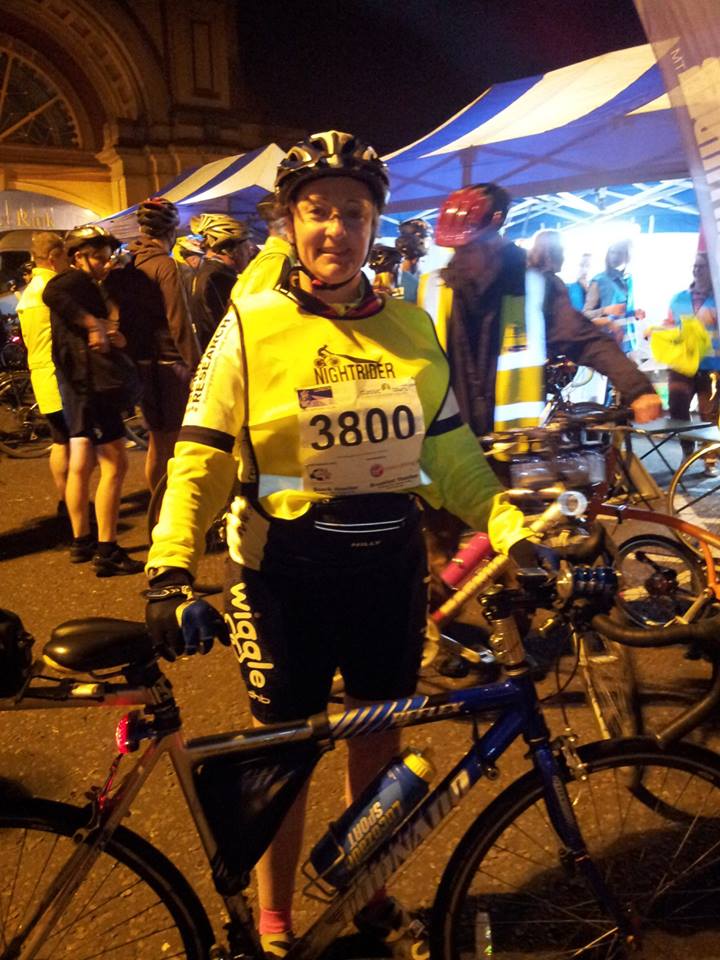
Nightrider 2013

Today was all about student-led and teacher-supported. The reason for the heavy emphasis?

.....Nightrider 2013.....

I woke up on Saturday at 6am and didn't get back into bed until 9pm on Sunday. That is a lot of hours without sleep. Although I mislead you... I did steal a couple of hours in that time, but I am now beyond groggy! So the students did all the work.

I love Nightrider. 100km around London with 3,999 other cyclists at night, seeing parts of London I have never seen before. And it means spending the weekend with Gemma, my adventure buddy. (For an idea of what it is like.... http://www.youtube.com/watch?v=-Ts9QonkjVE)

Here is a quick summary:

23:55 0miles - Alexandra Palace

Start time, and we hurtled down Ally Pally Hill, which is always a fun start. There is a hill quite soon after the start which is a struggle, but this year it was less of a battle. I think the difference was that Gemma and I cycled from the hotel we had booked, which was 8 miles from Ally Pally, which meant our muscles were warmed up. Phew!

The first part of the ride, minus the couple of hills, is reasonably flat. Which would in theory mean for a good quick start, but we hit the centre of London quite early on, so there was a lot of stop-start with so many traffic lights. But an improvement, I think, to the course took us away from the heart of London sooner, so the cycling was much better for that.

01:30 14miles - Imperial War Museum - Break point #1
As ever, the volunteers were brilliant, and imagine my delight to find Tunnocks wafers being handed out!!! There is something almost magical about stopping at the break points while it is dark. The mixture of flashing red and white lights is close to Christmas, and add to that the bicycle bells (just like in the Queen song), and you have yourself some magic! The mechanics were kind enough to lend me their pump, which set me up for the rest of the ride.

03:30 28miles - Crystal Palace - Break point #2
The ride between these two break points was flat and fun, and I even enjoyed the brute of the hill that we cycled up to reach Crystal Palace. It was brutal, but I had really found my rhythm and pushed hard, and the reward when you reach the top is brilliant, especially when you can then cycle on a slight downhill to get the blood back into the muscles. The first 28 miles of the ride is jam-packed with incredible views of London landmarks, and sometimes there is too much to see - you miss so much!

05:00 40miles - Tower Bridge - Break Point #3
My favourite stop.

Usually the sunrise is better, but it is such a good part of the ride. It usually comes at just the right time, and due to the change of course, it snuck up on us and as we came round a corner, there was the Tower, and I pointed to it like an excited kid! I also love cycling from Crystal Palace to Tower Bridge because of the route through Greenwich. Again, there is so much to see as you pedal.

06:30 53miles - Mile End - Break Point #4
This is another welcomed stop, as the energy levels need building up for the final push. I was determined to finish the ride by cycling all the way up Ally Pally hill to the finish, so I made the most of the snacks available to us. I also used a cheeky bit of nappy cream - a godsend to anyone that needs such a tip - to prevent any unnecessary discomfort! As at all the break points, there was a lot of banter from everyone, which makes you feel part of a big group, and part of a team, all striving for the same goal, and there is an unspoken respect for everyone taking part. We know how hard it is!!!

07:30 63miles Alexandra Palace - The Finish
And how satisfying it was this year. I struggle with the hill at the end. This year I was determined to get to the top. I reached my targeted bollards (that isn't a euphemism, btw) and felt the burn enough to stop, but then after 5 minutes of walking I climbed back on and cycled to the finish line, proud as punch itself. The bacon roll and cup of tea tasted all the more sweet.

Because of our marvellous planning, we had booked a hotel, which saved the 'driving home whilst falling asleep' issue that we usually face. That did mean, however, that we had to cycle back to the hotel.... So in total we cycled 81miles. I loved it. And I love my bike. Love it!

Nightrider, I loved the changes to the route, and the volunteers are worth their weight in gold! See you in 2014!!!!

Today's choon? Mental As Anything, of course!!!

http://www.youtube.com/watch?v=eThl2OayKRw


Monday, 3 June 2013

More than this

First day back, and all was calm.

I cracked on with the work, making sure everything was ready for the day ahead. I also had an hour of learning walks in Maths, so made sure I didn't have to rely on that hour for prep etc.

(I am always tempted to do Pythonesque Silly Walks during a learning walk, as the name lends itself to that and only that.)

Year 10 for starters were a pleasure, which is such a good way to start.

Then came Year 9s. I thought I had done well with my planning. The first task they had when they walked in was Venn Diagrams. With all our KS3 groups we are revisiing for Exam Week. So to shake off the cobwebs I opted for a word-sort activity.

Each pair had:

A blank Venn Diagram - 3 circles, each labelled with a topic from the first 3 half terms
A bank of words/phrases - all relating to the 3 topics
A pair of scissors

They had to cut up the words/phrases and place them on the Venn. It was very interesting to see how many students realised that sentences can overlap topics. Even then it was tricky for some to understand that "Je vais au cinéma" can apply to hobbies, media and holiday topics!

Yes Year 9s were doing the task, but for some of them it was as though I asked them to cut open veins and offer me blood. They were frustratingly unsettled, and nonchalant when reprimanded. Grrrr!

I think I learnt from the unsettledness of Year 9s when I welcomed Year 8s to my room after lunch. Because I had the same task (with different topics and phrases), I set them to it as soon as they arrived. We then played 9 Box-Bingo and Strip Bingo with the words/phrases cards, as they weren't stuck down. The students seemed to be much more engaged.

Would it have worked with the 9s, had we used the cards more? Maybe so. I expected more focus than I received, that's for sure.

This evening I arrived home at 5.30, and the next thing I knew it was 8.30pm. Where did the time go? Good grief!

So happy Monday, and it is only 36 days left. Or so my colleagues tell me!